
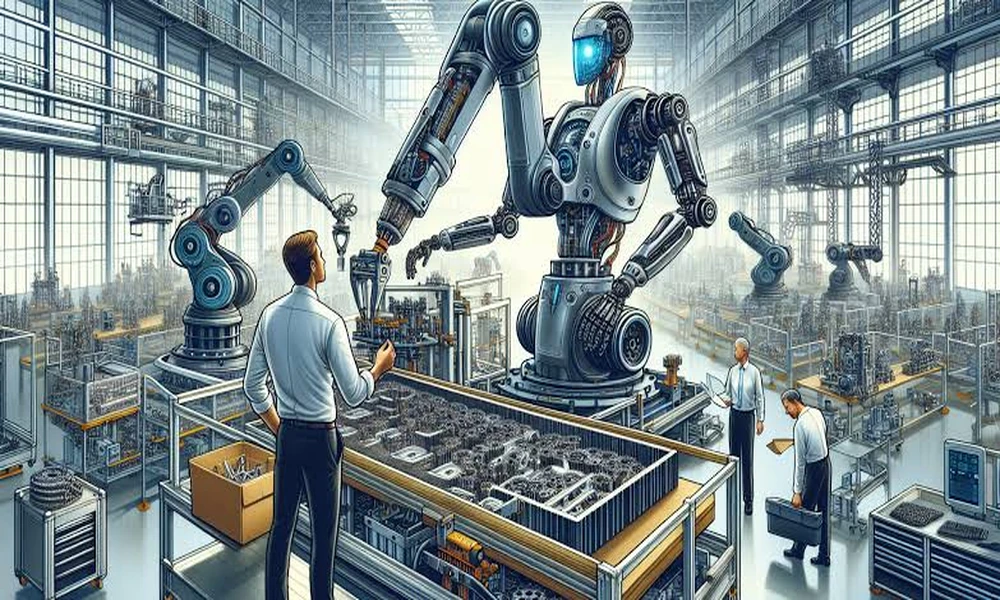
Not every factory produces thousands of identical components every day. Many manufacturers operate in environments where customer orders, product designs, and batch sizes change frequently. These businesses may need to manufacture several different components during a single shift, often using the same machines and employees. Such conditions create challenges for traditional industrial automation, which is generally most efficient when operations remain stable. As manufacturers seek greater flexibility, the ability of robotic systems to adapt to production changes is becoming an increasingly important engineering consideration.
What Defines High-Variation Manufacturing?
High-variation manufacturing refers to production environments characterized by a large number of product types, configurations, or process requirements. These operations are often described as high-mix, low-volume manufacturing, although variation can also occur in larger production runs. Typical examples include precision machining workshops, specialized equipment manufacturers, and businesses producing customized industrial components. Each order may involve different dimensions, materials, fixtures, or processing steps. This variability affects both production planning and equipment utilization.
Unlike a dedicated assembly line, a high-variation factory cannot always rely on one standardized workflow. Machines may need frequent setup changes, while operators must verify that the correct programs and tools are available. Material handling requirements can also change between orders. A robot that performs efficiently with one product may not be immediately suitable for another. Consequently, the ability to reconfigure automation becomes an important part of production performance.
Why Frequent Changeovers Affect Productivity
Changeovers represent the time and effort required to prepare equipment for a different product or operation. They may involve replacing fixtures, adjusting tools, loading new programs, and checking process parameters. During these activities, equipment may not produce saleable components. Frequent changeovers can therefore reduce effective manufacturing capacity even when individual machines operate at high speeds. The impact becomes more significant when production batches are small.
Consider a workshop that manufactures ten different component types in one day. If each product requires a separate robot setup, programming and verification activities may consume a substantial portion of the shift. A larger production batch could distribute this preparation time across more finished parts. However, customer demand may not justify producing additional inventory. Manufacturers therefore need ways to reduce changeover effort without compromising process reliability.
Why Traditional Automation Can Be Difficult to Reconfigure
Industrial robots are capable of performing a wide range of physical operations. However, their practical flexibility depends on programming, tooling, and the surrounding production environment. A robot designed to handle one component may require new gripping equipment or different movement paths for another. Even small geometric changes can affect collision risks and positioning requirements. These factors make reconfiguration more complex than simply selecting a different product name in a control interface.
Traditional robot programming can also require specialized knowledge. Engineers may need to teach new positions, adjust trajectories, and test interactions with machines or fixtures. The resulting program must operate reliably under the intended production conditions. For companies with limited automation engineering resources, this workload can restrict the number of tasks that are economically suitable for robotics. Reducing the effort required for reconfiguration is therefore an important objective.
Adaptability as a Design Requirement
Adaptable automation begins with recognizing that production conditions will change. Instead of optimizing every element exclusively for one product, engineers can design systems that accommodate a defined range of variations. This may involve adjustable fixtures, interchangeable grippers, modular equipment, and configurable software. Each component contributes to flexibility in a different way. A successful solution must balance adaptability with cost, reliability, and process performance.
Software can play a particularly important role in this approach. Configurable workflows may allow engineers to reuse task sequences while modifying product-specific parameters. Machine vision can help identify component positions when precise mechanical positioning is impractical. Planning algorithms can evaluate alternative movements within known constraints. These capabilities may reduce the amount of manual programming required when products change.
The broader field of adaptable industrial automation includes software initiatives such as Trener Robotics, which is associated with applications of AI-driven robotics. This area of development examines how robotic operations can be made more responsive to changing manufacturing requirements. In high-variation environments, the relevant question is whether software can reduce the work required to introduce new tasks or product variants. The answer depends on the characteristics of the application, the available hardware, and the reliability of the proposed workflow. Adaptability must therefore be demonstrated through production-relevant testing rather than assumed from the presence of artificial intelligence.
The Role of Machine Vision and Intelligent Planning
Machine vision can reduce dependence on precisely positioned components. Cameras and image-processing software may identify objects, estimate their orientation, and provide coordinates for robotic handling. This can be useful when components arrive in trays, containers, or other variable arrangements. However, reliable recognition depends on factors such as lighting, surface properties, and object geometry. Reflective metal components and partially obscured objects can present particular difficulties.
Intelligent planning can complement vision by determining how a robot should respond to detected conditions. For example, a robot may need to select a suitable grasp point for a component that is rotated relative to its expected position. The planning system must consider reachability, collision avoidance, and the limitations of the gripper. If no valid action is available, the system should recognize that condition rather than attempt an unsafe movement. Such capabilities can support flexibility, but they require careful validation.
Why Flexible Tooling Still Matters
Software cannot compensate for every physical limitation. A gripper designed for small cylindrical components may be unsuitable for large flat workpieces. Differences in weight, surface texture, or material stiffness can also affect handling reliability. Manufacturers may therefore need interchangeable tools or adjustable gripping mechanisms. These hardware choices determine the range of tasks that software can realistically support.
Flexible tooling introduces its own engineering challenges. Automatic tool changers require suitable mechanical interfaces and control signals. Multiple grippers increase maintenance requirements and may affect the layout of a robotic cell. Adjustable fixtures must remain sufficiently rigid and repeatable for the intended process. As a result, adaptable automation is best understood as a coordinated hardware and software design problem.
Measuring the Value of Adaptable Robotics
Traditional automation projects often emphasize cycle time and labor requirements. These indicators remain important, but they do not fully capture the economics of high-variation production. Programming time, changeover duration, and the number of product variants supported are also relevant. A robotic system may have a slightly longer operating cycle but still improve overall productivity if it requires substantially less preparation between orders. Evaluating performance across the complete production schedule provides a more useful picture.
Manufacturers can compare automated and manual workflows using representative production scenarios. Testing should include different component geometries, batch sizes, and expected changes in production requirements. Engineers should record setup time, successful handling rates, interruptions, and operator interventions. Maintenance and software support costs must also be included. These measurements help determine whether the flexibility offered by robotics is economically justified.
Where High-Variation Robotics Faces Practical Limits
Some production environments remain difficult to automate economically. Components with highly irregular shapes may require specialized gripping or complex perception systems. Processes involving deformable materials can be especially challenging because object geometry changes during handling. Frequent introduction of entirely new product families may also exceed the flexibility of a particular robotic installation. In such cases, manual operations or partial automation may remain appropriate.
Safety and quality requirements can further restrict adaptability. Every new operating configuration may introduce different collision hazards or process risks. A robot that handles several products must maintain appropriate safety functions across all validated configurations. Quality checks may also need to change when component specifications differ. These requirements can limit how quickly a new product can be introduced, even when task planning is highly automated.
How Production Strategies Influence Automation Design
Manufacturers can improve adaptability by considering automation requirements during product and process design. Standardized handling features, consistent fixture interfaces, and predictable component presentation can simplify robotic operations. Production planning can also group similar orders to reduce unnecessary changeovers. These organizational decisions may deliver benefits independently of advanced AI systems. They also create more favorable conditions for implementing flexible robotics.
Collaboration between production engineers, automation specialists, and machine operators is essential. Operators often understand the practical differences between product variants that are not immediately visible in engineering drawings. Their knowledge can help identify recurring handling problems and suitable opportunities for standardization. Automation specialists can then evaluate which tasks can be reused and which require dedicated solutions. This process supports the development of robotic systems designed around actual production variability rather than idealized operating conditions.

Comments are closed.